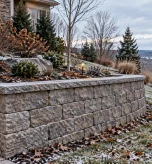
You spent real money on that retaining wall. Now, after another brutal Bucks County winter, something looks off. Maybe it’s leaning further than it used to. Maybe there’s a crack down the face you don’t remember seeing last fall. Maybe the soil behind it is starting to push out in a way that makes you nervous.
You’re right to pay attention. Every spring, our retaining wall contractor team at Paz Landscaping & Services gets calls from homeowners across Bristol, Langhorne, Levittown, and Bensalem dealing with exactly this situation. Pennsylvania’s freeze-thaw cycles — repeated freezing and thawing from November through March — put enormous stress on retaining walls, especially ones that weren’t built with proper drainage and base preparation.
The good news: catching the warning signs early means you can fix the problem before it escalates into a full wall collapse, a shifting hillside, or serious damage to the property behind it. The bad news: most homeowners don’t know what to look for until the damage is already advanced.
In this guide, we’ll walk you through the 5 most common signs that a retaining wall is failing after winter, explain what’s actually causing each one, and tell you what needs to happen to fix it — including when it’s safe to address on your own and when it’s time to call a professional retaining wall installer.
What You’ll Learn
- Why Bucks County winters are especially hard on retaining walls
- Sign #1: Visible leaning or tilting
- Sign #2: Cracks in the wall face
- Sign #3: Bulging or bowing sections
- Sign #4: Soil erosion or displacement behind the wall
- Sign #5: Drainage failure at the base
- What to do when you spot these warning signs
- Why Bucks County homeowners trust Paz Landscaping for retaining wall repair
- Frequently asked questions
Why Bucks County Winters Are So Hard on Retaining Walls
Before we get to the five signs, it helps to understand what’s happening to retaining walls during a Pennsylvania winter — because the cause of almost every failure pattern comes back to the same two forces: freeze-thaw cycling and hydrostatic pressure.
Bucks County sees repeated temperature swings between roughly 10°F and 40°F throughout winter. Every time the ground freezes, moisture in the soil expands. Every time it thaws, that moisture contracts. Over a single winter, this cycle can repeat dozens of times. The cumulative pressure on a wall’s base, drainage system, and structural connections is significant.
On top of that, Bucks County is heavy with clay soil — a particularly problematic material for retaining walls. Clay holds water instead of draining it. When clay behind a wall becomes saturated, it becomes extremely heavy and puts massive lateral pressure against the wall. If the drainage system can’t move that water out fast enough, the pressure builds until something gives.
| Local Expert Insight
In our 10+ years working on retaining walls across Bucks County, the majority of failures we see come down to two root causes: insufficient drainage installation and base preparation that didn’t account for Pennsylvania’s freeze-thaw cycles. Both are problems that show up as the five signs below. |
The 5 Signs Your Retaining Wall Is Failing After Winter
Sign #1: Visible Leaning or Tilting
A retaining wall that has started to lean forward — away from the hillside it’s holding back — is one of the most alarming and unmistakable signs of structural failure. Even a lean of just a few degrees beyond what’s normal (most walls are built with a slight backward lean called “batter” built in) indicates serious movement.
What causes it: Leaning is typically caused by lateral pressure from saturated, heavy soil behind the wall overwhelming the wall’s structural resistance. During a wet winter or spring thaw, Bucks County clay soil becomes extraordinarily heavy. If drainage weep holes or a gravel drainage layer weren’t properly installed, that weight has nowhere to go except forward.
Urgency level: High. A leaning retaining wall can progress to full collapse quickly, especially after heavy rain when soil weight spikes. Do not leave this unaddressed through another season.
Sign #2: Cracks in the Wall Face
Not all cracks in a retaining wall mean immediate failure — small surface cracks in mortar joints are relatively common and manageable. But certain crack patterns are serious warning signs that the wall’s structural integrity is compromised.
Watch for: horizontal cracks running along the length of a block or stone wall (indicate bending stress), diagonal cracks radiating from corners (indicate shifting), and cracks that are widening or have visible displacement between the two sides.
What causes it: Freeze-thaw cycling is the primary culprit here. Water infiltrates tiny gaps in the wall face, freezes and expands, and widens those gaps with each cycle. Over two or three winters, small surface cracks become structural fractures. Improper base installation accelerates this, since a shifting foundation creates stress points that crack the wall from the inside out.
Urgency level: Medium to high, depending on crack type and location. Horizontal cracks are the most serious and should be evaluated by a retaining wall contractor immediately.
Sign #3: Bulging or Bowing Wall Sections
Bulging — where a section of the wall bows outward in the middle — indicates that the wall is absorbing more lateral pressure than it was designed to handle. You may notice this as a subtle curve when you look down the wall’s face, or as a more obvious outward bubble in one section.
What causes it: Bulging happens when drainage failure allows hydrostatic pressure to build behind the wall. In Bucks County, late winter and early spring are the most dangerous periods — snow melts rapidly, the ground is still partially frozen and can’t absorb water, and drainage systems are often blocked with debris from fall. That combination creates a perfect storm of water pressure against the back of the wall.
Urgency level: High. A bulging section has already exceeded its design limits. Failure, when it comes, often happens suddenly and can move significant amounts of material.
Sign #4: Soil Erosion or Displacement Behind the Wall
Walk the area behind your retaining wall. If you notice soil pulling away from the wall base, sinkholes forming on the surface above, or visible gaps between the soil and the top course of blocks, the wall’s structural connection to the hillside has been compromised.
What causes it: Erosion behind a retaining wall is a sign that water is moving through the backfill in ways it shouldn’t be. This often indicates that the gravel drainage layer and geogrid (fabric used to tie the wall into the hillside on taller walls) are either absent, insufficient, or have broken down. Bucks County’s clay soil is particularly susceptible to erosion when saturated — it doesn’t hold its structure under flowing water.
Urgency level: Medium to high. Erosion behind the wall will eventually cause the wall to lose its footing and fail. It also creates sinkholes and instability that can be a safety hazard.
Sign #5: Drainage Failure at the Base
Look at the base of your retaining wall during or right after a rainstorm. Water should be flowing out of weep holes (small gaps left between blocks near the base) and moving away from the wall. If you see standing water pooled at the base with no movement through the wall, or if the weep holes are completely clogged with debris, your drainage system has failed.
What causes it: Drainage failure is often caused by weep holes clogging with sediment and debris over time, the absence of a proper gravel drainage layer behind the wall, or a drainage pipe that has shifted or compacted. Bucks County’s heavy clay soil accelerates clogging — clay particles wash into drainage layers and compact them over time, reducing their effectiveness season after season.
What makes this especially dangerous: Drainage failure is the root cause behind signs 1, 2, and 3. A wall that looks structurally fine but isn’t draining properly is building toward a failure event. Don’t ignore clogged weep holes.
Urgency level: Medium. Drainage failure alone isn’t an emergency, but it needs to be addressed before another wet season or before visible structural symptoms develop.
What to Do When You Spot These Warning Signs
Once you’ve identified one or more of the signs above, the next step depends on the severity and the type of wall you have.
What You Can Do on Your Own
For minor cosmetic surface cracks in mortar joints, repointing with appropriate mortar is a manageable DIY repair. Clearing debris from weep holes with a stiff brush or a small probe is also something most homeowners can handle.
However, these DIY fixes address symptoms, not root causes. If drainage failure or base movement is driving the problem, clearing weep holes is a temporary measure at best.
When to Call a Retaining Wall Contractor
Any sign of leaning, bulging, or significant cracking should be evaluated by an experienced retaining wall builder — not a general handyman. Retaining walls are structural features, and improper repairs can make the underlying problem significantly worse.
At Paz Landscaping & Services, our retaining wall installation and repair process for Bucks County homeowners typically involves:
- Full structural assessment — We evaluate the wall’s lean, drainage function, base condition, and backfill status before recommending any repair approach.
- Drainage remediation first — In most cases, restoring proper drainage is the foundation of any retaining wall repair. This may involve installing or clearing French drains, adding or replacing gravel backfill, and clearing weep holes.
- Structural rebuilding when necessary — Walls with significant lean, bulging, or base failure often need to be partially or fully rebuilt. We rebuild with proper base compaction, adequate batter, gravel drainage layers, and weep holes — the elements that protect against future freeze-thaw damage.
- Material matching and aesthetic restoration — We match existing materials whenever possible so repairs blend with the surrounding wall.
| Pro Tip from Our Team
The single biggest mistake we see Bucks County homeowners make is patching the visible damage without addressing the drainage issue driving it. A patched wall with failed drainage will fail again, often faster than the original. Always start with the drainage assessment. |
Why Bucks County Homeowners Choose Paz Landscaping for Retaining Wall Repair
Paz Landscaping & Services has been serving homeowners across Bristol, Langhorne, Levittown, Bensalem, and all of Lower Bucks County since 2013. When it comes to retaining wall installation and repair, our team brings more than a decade of hands-on experience working specifically in the conditions that define this region — heavy clay soil, aggressive freeze-thaw cycles, and older properties with drainage systems that weren’t built for modern rainfall patterns.
We’re a family-owned retaining wall company, which means Angel Paz is personally involved in every project. That accountability matters when you’re trusting someone to repair a structural feature of your property.
Our credentials:
- Licensed Pennsylvania contractor (PA118491)
- BuildZoom score: 96 — top 20% of 125,106 licensed PA contractors
- Over 10 years serving Bucks County homeowners
- Free consultations with no-obligation estimates
- 5.0 Yelp rating from Bucks County clients
Frequently Asked Questions
How much does retaining wall repair cost in Bucks County?
Retaining wall repair costs in Bucks County typically range from $500–$1,500 for drainage-only fixes and minor repointing, up to $3,000–$15,000 or more for partial or full rebuilds depending on wall length, height, and materials. Paz Landscaping & Services provides free, detailed estimates — call (267) 274-8515 for a personalized quote.
Can I repair a leaning retaining wall myself?
Minor surface crack repair and weep hole clearing are manageable DIY tasks. However, a leaning or bulging retaining wall is a structural problem requiring professional assessment. Attempting to push or brace a leaning wall without addressing the underlying drainage and base issues is dangerous and typically makes the eventual repair more expensive.
How long does retaining wall repair take?
Drainage repairs and minor patching typically take one to two days. Partial or full rebuilds on residential walls generally run two to five days depending on length and height. Paz Landscaping & Services provides a timeline during your free consultation.
What causes retaining walls to fail in Pennsylvania?
The two primary causes of retaining wall failure in Pennsylvania are inadequate drainage installation and improper base preparation. Bucks County’s clay soil holds water instead of draining it, creating hydrostatic pressure against the wall. Pennsylvania’s freeze-thaw cycles then repeatedly stress the wall’s structure. Both issues are preventable with proper installation — and both can be corrected during a professional repair.
How do I know if my retaining wall needs to be fully rebuilt or just repaired?
Walls with significant lean (more than 2–3 inches out of plumb), extensive horizontal cracking, or active bulging typically require full or partial rebuilds. Walls with drainage problems, minor cracking, or early-stage movement can often be repaired. A retaining wall contractor assessment is the only reliable way to make that determination. Paz Landscaping & Services offers free consultations for exactly this purpose.
Do you serve Langhorne, Levittown, and Bensalem for retaining wall work?
Yes — Paz Landscaping & Services serves all of Bucks County including Langhorne, Levittown, Bensalem, Croydon, Fairless Hills, Morrisville, Penndel, Yardley, Newtown, and surrounding communities. We’ve been serving Lower Bucks County homeowners since 2013.
Are you licensed and insured for retaining wall installation?
Yes. Paz Landscaping & Services is fully licensed (PA118491) and insured. Our BuildZoom score of 96 places us in the top 20% of all Pennsylvania licensed contractors. We’re a licensed retaining wall builder, not a general handyman service.
When is the best time to repair a retaining wall?
Spring is ideal — the freeze-thaw damage is fresh, soil is accessible, and you have the full growing season for any disturbed landscape areas to recover. That said, retaining walls showing active movement or significant leaning should be evaluated and addressed as soon as possible, regardless of season.
Next Steps: What to Do Today
If you’ve been nodding your head through this article, here’s the short version of what to do:
- Walk your retaining wall now and check for the five signs above.
- If you see leaning, bulging, or significant cracking — schedule a professional assessment before the next wet season adds more pressure.
- If you see drainage failure or early surface cracking — address it now, before it becomes a structural problem.
- Don’t patch visible damage without investigating the drainage first.
Ready to get eyes on your wall? Paz Landscaping & Services offers free, no-obligation consultations for retaining wall repair and installation across all of Bucks County. Call us at (267) 274-8515 or visit us to request your free estimate. We’re available Monday through Friday, 7 AM to 5:30 PM, and Saturday 7 AM to 12 PM.
We serve Bristol, Langhorne, Levittown, Bensalem, Croydon, Fairless Hills, Morrisville, and all of Lower Bucks County. Job done right the first time — that’s our promise.