You’ve been planning a new patio for months—browsing photos, picturing summer evenings outside. But the moment you start researching paver materials, everything gets confusing. Concrete, natural stone, clay brick, travertine, porcelain: each claims to be the best, and the price differences are huge. You’re worried about picking wrong and ending up with a patio that cracks, shifts, or looks dated in five years.
Bucks County homeowners face this decision every spring, and the wrong choice can cost thousands in repairs. Paver selection isn’t really about looks—it’s about matching the material to our clay soil, freeze-thaw cycles, and how you’ll actually use the space. In our 10+ years serving homeowners from Bristol to Langhorne to Levittown, we’ve seen the same materials succeed and fail repeatedly. This guide shows you how to choose the right paver material for your Bucks County patio and avoid the costly mistakes most homeowners make.
What You’ll Learn
- Why paver material choice is a bigger decision than most homeowners realize
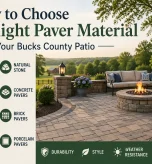
- The 5 paver materials best suited for Bucks County patios
- How clay soil and freeze-thaw cycles affect paver performance
- How to match paver material to your budget, lifestyle, and home style
- Frequently asked questions about paver patios in Bucks County
What Is the Real Problem With Paver Selection?
Choosing paver material seems simple—pick what looks good and fits the budget. But paver performance depends heavily on local conditions, installation quality, and long-term use. What works beautifully in Phoenix can fail within a few winters in Lower Bucks County.
Common signs you’re making the wrong material choice:
- Choosing based on a showroom display, not real Pennsylvania performance
- Picking the cheapest option without considering 10-year costs
- Selecting a material your contractor rarely installs locally
- Ignoring how your patio connects to existing hardscape and landscape
We regularly get calls from homeowners in Levittown, Fairless Hills, and Bensalem whose 3-5 year old patios are already heaving or fading. By then, the original installer is long gone, and repair costs often exceed what a proper installation would have cost in the first place.
The Real Causes Behind Paver Material Mistakes
Most paver material problems in Bucks County trace back to four root causes that have little to do with the pavers themselves.
Cause 1: Ignoring Bucks County’s Clay Soil
Our region sits on dense clay that holds moisture, expands when wet, and contracts as it dries. This constant movement stresses any hardscape built on top of it. Softer, porous materials absorb moisture and crack. The right paver material must be dense, low-absorption, and installed over a base engineered for clay conditions.
Cause 2: Underestimating Freeze-Thaw Damage
Pennsylvania winters bring 40 to 50 freeze-thaw cycles per season. When water seeps into a paver’s pores and freezes, it expands about 9%, causing spalling, cracking, and crumbling. Materials rated for warmer climates can’t handle this—every recommendation for Bucks County must include freeze-thaw rating and absorption rate.
Cause 3: Mismatching Material to Use
Even the best material fails when used for the wrong purpose. Soft limestone wears down under heavy grill traffic. Textured tumbled pavers are harder to shovel snow from. Light colors show stains from acorns and berries common in Yardley and Newtown. A good hardscape contractor asks how you’ll use the space.
Cause 4: Working With the Wrong Installer
The best material fails with a poor base. We’ve rebuilt patios where the right paver was used but the base wasn’t deep enough or lacked drainage for clay soil. A trusted paver contractor specifies material and installation method together.
How to Identify the Right Paver Material for Your Project
Before you fall in love with a showroom sample, work through this quick self-assessment:
- Primary use: dining, lounging, pool surround, grill area? High-traffic zones need denser, more durable materials.
- Site conditions: shade, nearby trees, slope affect staining, algae, and drainage.
- Maintenance tolerance: some materials need annual sealing; others need almost none.
- Budget: include material, installation, base prep, and a 10% contingency.
- Home style: modern pavers look out of place on a Colonial in Newtown; traditional brick can clash with new Bensalem construction.
- Resale: choose timeless materials over trendy ones if selling within 5-7 years.
The 5 Best Paver Materials for Bucks County Patios
Based on over a decade of installing, repairing, and replacing patios across Lower Bucks County, these five materials consistently perform well in our climate and soil.
1. Concrete Pavers
The workhorse of Bucks County patio installation. Modern concrete pavers are rated for severe freeze-thaw, have low water absorption (under 5%), and run $3-$8 per square foot. They’re forgiving to repair—individual pavers can be lifted and reset. Best for: durability, design flexibility, strong long-term value.
2. Natural Stone (Bluestone, Flagstone)
Pennsylvania bluestone is practically native to our region and handles our climate beautifully. It’s dense, durable, and gains character with age. Flagstone’s organic shapes suit older homes in Morrisville and Yardley. $8-$20+ per square foot. Best for: genuine character, high-end appearance.
3. Clay Brick Pavers
True fired-clay brick is extremely dense, low-absorption, and freeze-thaw resistant when rated for paving. Color is baked through, so it never fades. Pairs perfectly with Federal and Colonial homes in historic Bristol and older Langhorne. $6-$12 per square foot. Best for: traditional homes.
4. Porcelain Pavers
The premium modern option. Nearly non-porous (under 0.5% absorption), porcelain shrugs off freeze-thaw, stains, and fading. Can realistically mimic stone or wood. $10-$20+ per square foot. Installation requires specific expertise. Best for: modern homes, low-maintenance priorities, pool surrounds.
5. Travertine
Natural limestone with a textured surface that stays cool in summer—popular for pool decks in Bensalem and Feasterville-Trevose. Its porosity is a liability if not sealed. Premium grade with proper sealing performs well. $8-$15 per square foot. Best for: pool surrounds, homeowners committed to annual sealing.
When DIY Patio Installation Is a Bad Idea
For small walkways, DIY can work. For a full patio over 100 square feet, hire a professional paver contractor. Base preparation requires heavy equipment, aggregate layering, and compaction testing to handle clay soil. The cost of tearing out a failed DIY patio typically exceeds professional installation.
Why Bucks County Homeowners Choose Paz Landscaping
Paz Landscaping & Services has been installing paver patios across Bucks County since 2013. As a family-owned, fully licensed hardscape company (PA118491) with a BuildZoom score of 96 (top 20% of PA contractors), we know which materials hold up in clay soil and which design choices still look great in 15 years. Angel Paz personally consults on every project. That’s why our slogan has been the same for over a decade: “Job Done Right The First Time.”
Frequently Asked Questions
How much does a paver patio cost in Bucks County?
Most paver patios in Bucks County run $15-$35 per square foot installed. A typical 300-square-foot patio costs $4,500-$10,500. Call (267) 274-8515 for a free, detailed estimate.
What’s the most durable paver material for Pennsylvania weather?
Porcelain and high-quality concrete pavers rated for severe weather offer the best freeze-thaw resistance. Pennsylvania bluestone is also excellent. The biggest factor isn’t material alone—it’s installation over a proper base engineered for clay soil.
How long does a paver patio installation take?
Most residential paver patios take 3 to 7 working days. Larger designs with multiple levels or built-in features can take 1-2 weeks.
Do I need permits for a paver patio in Bucks County?
Permit requirements vary by township across Bristol, Langhorne, Levittown, and Bensalem. Paz Landscaping handles permit research and filing as part of our service.
How do I find a good paver contractor in Bucks County?
Look for a licensed PA contractor with 5+ years of local experience, proper insurance, Bucks County project portfolio, and positive local reviews. Ask specifically about base preparation for clay soil.
Which paver material adds the most home value?
In Bucks County, quality natural stone (especially Pennsylvania bluestone) and premium concrete pavers add the most resale value. A well-designed paver patio can recoup 70-80% of its cost at resale.
Next Steps for Your Bucks County Paver Patio
Here’s what we recommend if you’re ready to move forward:
- Walk your yard and picture how you’ll use the space
- Identify drainage, sun, and tree conditions
- Set a budget that includes installation, not just material
- Schedule a free on-site consultation with a trusted local paver contractor
When you’re ready, call Paz Landscaping at (267) 274-8515 or visit pazlandscapingservices.com for a free, no-obligation estimate. Open Monday-Friday 7 AM-5:30 PM, Saturday 7 AM-12 PM. We serve Bristol, Langhorne, Levittown, Bensalem, and all surrounding Bucks County communities.
About the Author
Angel Paz is the Founder and Owner of Paz Landscaping & Services Inc, a family-owned hardscape company in Bristol, PA. With over 10 years installing paver patios, retaining walls, and outdoor living spaces throughout Bucks County, Angel leads a team known for clay-soil expertise and the company’s long-standing promise: “Job Done Right The First Time.” Licensed PA118491.